
How to Read Diesel Generator Model Numbers: A Guide to PowerLink Series Codes
Nov 05,2026
When comparing diesel generator quotes, you’ll often come across model numbers such as QSV200CS or QSV250CS. These codes may look complicated at first, but they contain useful information about the generator’s power rating and configuration.
The model number is a good starting point, but it doesn’t tell you everything. Two generators with similar codes may have different voltage requirements or emissions specifications. These differences matter, especially when sourcing equipment for overseas projects or installations with specific electrical standards.
PowerLink uses a range of model codes across its diesel generator lineup, from QSV and VR to EB, EC, and EP. Understanding how these codes work makes it easier to compare models, check specifications, and avoid ordering equipment that doesn’t match your project requirements.
Understanding PowerLink Diesel Generator Model Codes
What the Numbers Tell You About Generator Capacity
The numbers in a PowerLink generator model generally indicate its power rating in kVA. For example, QSV200CS and QSV250CS belong to the same series but have different rated capacities.
This makes the numerical part of the code a useful first reference when choosing a generator. However, it’s still important to check the published kVA and kW ratings against your actual power requirements.
The letters around the numbers help identify the generator series and configuration. PowerLink offers several diesel generator ranges, including QSV, VR 60 Hz, EB, EC, and EP.
Each range has its own specifications, so it’s worth checking the relevant product page rather than relying on the model number alone.
How to Identify Voltage and Frequency
The suffix at the end of a model number provides another clue about the generator’s electrical configuration.
Models ending in CS are typically listed with a 400 V, 50 Hz configuration, commonly used in international markets.
For 60 Hz generators, you’ll see suffixes such as C6S, X6S, or D6S. These identify the frequency configuration, but they don’t specify the exact voltage.
That’s an important distinction. Depending on the model, a 60 Hz generator may be available at 208 V or 480 V. Looking at the suffix alone won’t tell you which voltage you’re getting.
Before confirming an order, check the voltage and frequency columns in the official PowerLink diesel generator specifications. It’s a simple check that can prevent costly compatibility problems once the equipment arrives.
The Five Series and What Each One Covers
Five series cover the current range, and their published models are consolidated below. All models are listed as CE compliant with a general application rating.
| Series | 400 V Models | 60 Hz Models | Voltages Published | Emission Standard | Genset Brand |
|---|---|---|---|---|---|
| QSV | QSV27CS to QSV500CS | QSV30C6S to QSV450C6S | 400 V, 208 V, 480 V | Not declared | Powerlink |
| VR | Not published | VR11X6S to VR960X6S | 208 V, 480 V | Not declared | Powerlink |
| EB | B45S to B1250S | B20D6S to B575D6S | 400 V, 208 V | Stage II | Powerlink |
| EC | GMS30CS to GMS1500CS | GMS30C6S to GMS1375C6S | 400 V, 208 V, 480 V | Not declared | Cummins on the 400 V table, Powerlink on the 60 Hz table |
| EP | Not published | WPS16D6S to WPS1500D6S | 208 V, 480 V | Not declared | Powerlink |
Why Different Generator Series Have Similar Power Ratings
PowerLink offers several generator series with overlapping power ratings. If you’re looking for a 200 kVA generator, for example, you’ll find options in the QSV, VR, EC, and EP ranges.
The difference isn’t simply how much power they produce. Each series has its own electrical specifications and emissions information. The EC 400 V range also lists the engine brand, which may be an important factor when comparing models.
Rather than choosing a series based on its name, start with what your site actually needs: power output, voltage, frequency, and any local emissions requirements. From there, you can narrow down the available models and compare their specifications.
Checking Generator Emission Standards
Emissions requirements can be easy to overlook when comparing diesel generators, especially when the specifications don’t clearly state which standard a model meets.
In PowerLink’s published tables, the EB series is listed as meeting Stage II emissions standards. The other series don’t have a declared emissions rating in those tables. That doesn’t necessarily mean they fail to meet a particular standard; it simply means the information hasn’t been specified.
If your project needs a generator that meets a particular emissions standard, confirm compliance before placing an order rather than making assumptions based on the model code.
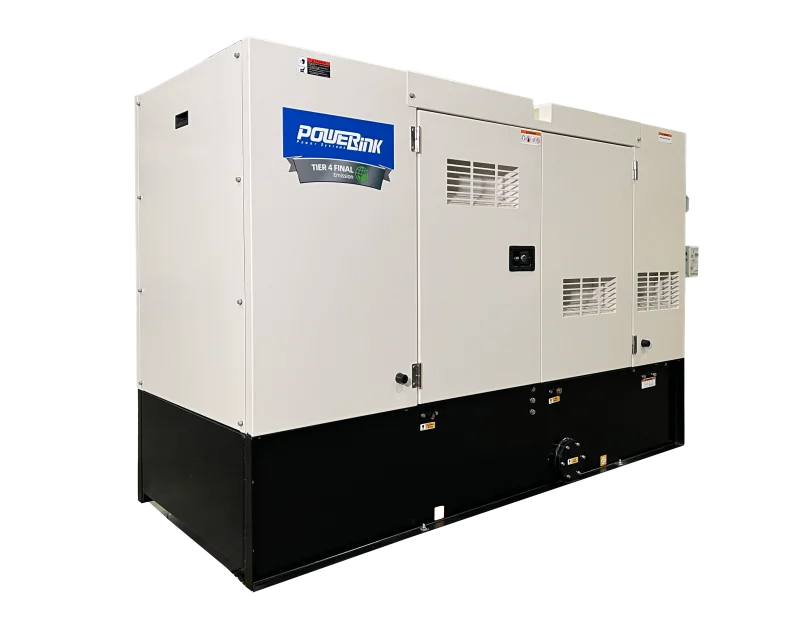
PowerLink also groups applicable generators under its Tier 4 Final and Tier 3 categories. For a closer look at how these standards compare, see the guide on Tier 3 vs. Tier 4 generators.
The Difference Between 208 V and 480 V Generators
Two voltages are published on the 60 Hz tables, and the split between them is not the same in every series. Published crossover points are recorded below.
| Series | 208 V Models | 480 V Models | Published Crossover |
|---|---|---|---|
| QSV | QSV30C6S to QSV400C6S | QSV400C6S to QSV450C6S | Around 400 kVA, with one model published at both |
| VR | VR11X6S to VR200X6S, plus VR245X6S | VR245X6S to VR960X6S | Around 245 kVA |
| EB | B20D6S to B575D6S | No 480 V models published | Not published above 208 V |
| EC | GMS30C6S to GMS450C6S | GMS400C6S to GMS1375C6S | Around 400 to 450 kVA |
| EP | WPS16D6S to WPS310D6S | WPS350D6S to WPS1500D6S | Between 310 and 350 kVA |
If your project requires 480 V and more than 400 kVA, the available options are limited to the VR, EC, and EP series. QSV and EB don’t offer models that meet both requirements in the published tables.
The EB series is even more limited when it comes to voltage. None of its listed models are available at 480 V, regardless of power rating.
This is why it’s worth checking the voltage listed for each model instead of relying on the general specifications for a whole series. A generator may have the right capacity but still be unsuitable for your site’s electrical system.
How to Check a Diesel Generator Model Before Ordering
A generator quotation may include the model number, power rating, and basic specifications, but that doesn’t always tell you whether the unit is right for your project. Before placing an order, there are a few details worth checking against the site’s requirements.
Start with the Site Voltage and Frequency
Voltage and frequency should be the first things you look at. If your site operates at 60 Hz, a model ending in CS won’t be suitable. Similarly, generators with C6S, X6S, or D6S suffixes are designed for 60 Hz systems and aren’t suitable for a 400 V, 50 Hz installation.
Even within the same series, voltage options can vary. Always refer to the specifications for the exact model listed in the quotation.
Make Sure the Generator Can Handle the Load
The capacity shown in the model number is a useful reference, but the generator still needs to meet your actual power demand.
Start with the calculated load in kVA and account for site conditions such as altitude and ambient temperature. Power factor also matters when converting between kW and kVA. A generator’s published rating may not reflect the usable output under your operating conditions.
For more on sizing, see PowerLink’s diesel generator selection guide.
Check the Emissions Requirements
If your project has specific emissions requirements, look for the standard listed against the individual model.
Don’t assume that every generator in a series meets the same standard, or that an unspecified emissions rating means the generator is compliant. Where Stage II, Tier 3, or Tier 4 Final compliance is required, ask for documentation confirming that the selected model meets the applicable requirements.
Check the Engine Brand When It Matters
Some projects specify an engine manufacturer, particularly when spare parts availability, maintenance support, or an existing fleet are involved.
For example, PowerLink’s EC 400 V table lists Cummins engines, while its EC 60 Hz table lists PowerLink. Even though both fall under the EC series, the engine brand isn’t the same.
If your project requires a particular engine manufacturer, check the engine information for the exact model before confirming the order.
Common Mistakes When Comparing Diesel Generator Models
!One of the easiest mistakes is confusing kVA with kW. The number in a PowerLink model code generally corresponds to its kVA rating, while the actual kW output is listed separately. Using the model number as a kW figure can lead to incorrect sizing.
!Voltage is another common source of confusion, especially with 60 Hz models. A generator may have the capacity you need but come with a voltage configuration that doesn’t match the site. That’s why the voltage column deserves just as much attention as the power rating.
!It’s also worth being careful with emissions information. A model series name doesn’t automatically tell you which emissions standard the generator meets. If the specification table doesn’t declare a standard, you’ll need to confirm it with the supplier.
!Finally, don’t assume generators from different series are interchangeable just because they have similar power ratings. Engine brands, electrical configurations, and emissions specifications can differ, even when the capacity is identical.
Frequently Asked Questions
Does the number in a PowerLink generator model indicate kVA or kW?
It generally refers to the generator’s kVA rating. The corresponding kW rating is listed separately in the product specifications, so check both figures when comparing models.
What do CS, C6S, X6S, and D6S mean?
The CS suffix identifies a 400 V, 50 Hz configuration. C6S, X6S, and D6S indicate 60 Hz configurations, with the exact voltage shown in the product table.
Which PowerLink diesel generator series offer 400 V models?
Based on the published specifications, the QSV, EB, and EC series include 400 V models. The VR and EP ranges are listed with 60 Hz configurations.
Do all PowerLink diesel generators have declared emissions ratings?
No. The published tables identify the EB series as Stage II, while the other series don’t specify an emissions standard. If compliance is required for your project, request confirmation for the model you’re considering.
Can I choose any generator series as long as the kVA rating matches?
Not necessarily. Two generators with the same rated capacity may have different voltages, frequencies, engine brands, or emissions specifications. Compare the complete specifications before making a decision.
Choosing the Right PowerLink Diesel Generator
Understanding a diesel generator model number makes comparing quotations much easier, but the code is only part of the picture.
The published specifications are where you’ll find the details that matter for your installation, particularly the voltage, frequency, power rating, emissions information, and engine manufacturer.
If you’re comparing PowerLink generator models for an upcoming project, share your site’s voltage, frequency, required capacity in kVA, emissions requirements, and expected commissioning date with our team. We can help you identify a suitable model and provide the relevant technical data sheet for review.
--- END ---