
PowerLink Battery Storage Systems: Comparing BS, BSW, BES, PES and PHE
Nov 15,2026
When choosing a battery energy storage system, capacity is usually one of the first things buyers look at. But two systems with similar storage capacities may be designed for very different applications.
The type of power input a system supports is just as important as how much energy it can store. Some installations need to work with the grid, while others may rely on solar power, diesel generators, or a combination of energy sources. Choosing the wrong configuration can limit how the system operates, even if its battery capacity meets the project’s requirements.
PowerLink offers five battery storage series: BS, BSW, BES, PES, and PHE. Each is designed with different power input configurations and operating requirements in mind.
In this article, we’ll look at how these series differ, compare their published storage capacities and power ratings, and explain what to check before selecting a model. You can also explore the full PowerLink battery storage range for detailed product specifications.
What Actually Separates the Five Series
Input Topology Is the First Decision
All five series store energy in a battery and deliver it through an inverter. They differ in how many sources feed that battery. Published inputs are recorded per series below.
| Series | Output Range | Battery Input | Solar Input | Grid Input | Wind Input | Genset Input |
|---|---|---|---|---|---|---|
| BS | 12 to 50 kVA | 20 to 100 kWh | 16 to 65 kW | Published on every model | Not published | Not published |
| BSW | 12 to 16 kVA | 20 to 30 kWh | 16 to 21 kW | Published on every model | 2,000 W | Not published |
| BES | 12 to 25 kVA | 20 to 38 kWh | 16 to 32 kW | Published on every model | Not published | 18 to 23 kVA |
| PES | 63 to 500 kVA | 80 to 689 kWh | 30 to 100 kW | Not published | Not published | Not published |
| PHE | 63 to 500 kVA | 80 to 689 kWh | 30 to 100 kW | Not published | Not published | Not published |
Each PowerLink battery storage series supports different power sources, so systems with similar capacities aren’t necessarily interchangeable.
For example, the BES series supports generator input, while the BSW series is designed to accommodate wind power. These input options are specific to their respective series, regardless of battery capacity.
The PES series, on the other hand, is listed with solar and battery inputs only. If your project requires charging from the grid, you’ll need to look at other series that support grid input.
When comparing models, check the available power inputs alongside the battery capacity. This will help you narrow down which systems can actually work with your site’s energy setup.
Battery Storage Capacity Across PowerLink Series
PowerLink’s battery storage systems cover a wide range of power requirements. The BS, BSW, and BES series offer models rated from 12 to 50 kVA, making them suitable for residential and smaller commercial applications.
For larger projects, the PES and PHE series provide options from 63 to 500 kVA.
There’s a gap between these two ranges, with no models currently listed between 50 and 63 kVA. If your project falls within that range, it’s worth reviewing the actual load requirements and discussing suitable system configurations before choosing a model.
Storage-to-Power Ratio and Runtime
Battery capacity quoted in kWh describes stored energy, and output quoted in kVA describes delivered power. General principles of a storage system are covered in what a BESS is and how it works, and the service life expectation in battery storage lifespan. The ratio between them is the runtime at full load, and it varies across the range far more than the headline capacity suggests.
| Model | Output kVA | Battery kWh | kWh per kVA |
|---|---|---|---|
| BS12S | 12 | 20 | 1.67 |
| BS16S | 16 | 30 | 1.88 |
| BS30S3 | 30 | 60 | 2.00 |
| BS50S3 | 50 | 100 | 2.00 |
| BES25S3 | 25 | 38 | 1.52 |
| BSW16S | 16 | 30 | 1.88 |
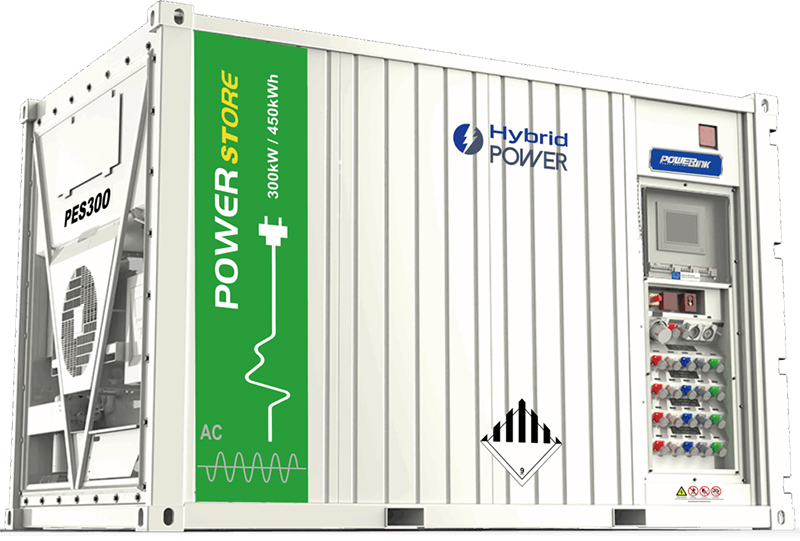
| PES63 | 63 | 80 | 1.27 |
| PES100 | 100 | 123 | 1.23 |
| PES200 | 200 | 230 | 1.15 |
| PES300 | 300 | 230 | 0.77 |
| PES500 | 500 | 689 | 1.38 |
Where the Ratio Drops
PES300 is published with the same 230 kWh battery input as PES200, which drops its ratio to 0.77 kWh per kVA against 1.15 for the smaller model. At full output that is a shorter runtime on the larger unit. A buyer moving from 200 kVA to 300 kVA for additional power therefore reduces the time the system holds that load, and the two figures have to be reviewed together before the model is confirmed.
A Closer Look at PowerLink Battery Storage Series
BS Series: Grid and Solar Power for Smaller Applications
The BS series covers 12 to 50 kVA and supports grid power, solar input, and battery storage. It’s a straightforward option for homes and smaller commercial sites that need to store solar energy or use battery power alongside the grid.
Models come with either an S or S3 suffix, and both versions are available at certain power ratings. When comparing models, check the specifications for each suffix to make sure the configuration matches your project.
At the higher end of the range, the BS30S3 and BS50S3 models offer 2.00 kWh of battery storage per kVA of rated power, the highest ratio among the models listed in PowerLink’s current range.
BSW Series: Battery Storage with Wind Power Input
The BSW series builds on the smaller BS models by adding support for a 2,000 W wind turbine input. It retains a similar inverter and battery configuration while allowing wind power to contribute alongside solar energy.
With models available up to 16 kVA, BSW is better suited to smaller installations where wind provides an additional source of energy.
For sites that rely heavily on wind generation or need higher power output, the available BSW models may not be sufficient. In those cases, the wind generation capacity and expected load should be reviewed before selecting a system.
BES Series: Designed to Work with Diesel Generators
The BES series supports grid, solar, battery, and diesel generator connections, making it particularly useful for sites that already have a genset installed.
By combining battery storage with an existing generator, a BES system can help reduce generator running hours when operating conditions allow. This can be useful for remote facilities or commercial sites looking to manage fuel consumption.
The listed generator input ratings range from 18 to 23 kVA, depending on the model. These figures aren’t always the same as the system’s rated output, so both specifications need to be checked when matching the battery system to an existing generator.
PES and PHE Series: Higher-Power Storage Systems
For larger power requirements, PowerLink offers the PES and PHE series, with models rated from 63 to 500 kVA.
Both ranges list solar and battery inputs and share the same power rating options. The main difference is how the equipment is intended to be deployed. PHE is designed as a mobile mixed-energy solution, while PES offers a different equipment arrangement for projects that need higher power capacity.
One detail worth checking is grid compatibility. Neither series lists a dedicated grid or generator input in the current specifications. If your site requires charging from the grid or integration with an existing diesel generator, confirm the available connection options with PowerLink before choosing a model.
How to Choose the Right Battery Storage System
Choosing a battery storage system starts with understanding how power is supplied and used at your site. Before comparing model numbers, make sure you know which energy sources are available, how much power the system needs to deliver, and how long it needs to support the load.
Start with Your Available Power Sources
Look at the power sources already available on site. Is there a grid connection? Will the system use solar panels or a wind turbine? Is a diesel generator already installed?
These details will help narrow down the PowerLink series that can work with your setup. For example, a site that needs generator input should look at the BES range, while BSW offers a wind input for smaller systems.
Match the Power Rating to Your Load
Once you’ve identified the suitable series, compare the system’s rated output with your site’s power demand.
Check the maximum expected load and whether the system needs to supply that power continuously or only during short periods of high demand. A system that handles occasional peaks may have different storage requirements from one expected to run equipment for several hours.
The relationship between battery capacity and power output is also worth comparing. A higher kWh-to-kVA ratio generally indicates more stored energy relative to the system’s rated output, which may be useful for applications that need longer backup duration.
Estimate How Long the Battery Needs to Run
Battery capacity is measured in kWh, while the load the system supplies is measured in kW. To estimate runtime, divide the usable battery capacity by the expected load.
For example, a system with 100 kWh of usable battery capacity supplying a steady 25 kW load would have an estimated runtime of four hours. Actual runtime may be shorter depending on battery operating limits, inverter losses, and other system conditions.
Use the site’s expected operating load rather than the inverter’s maximum rating when making this calculation.
If your site also uses a diesel generator, PowerLink’s ABS hybrid energy system provides an example of how battery storage and generator power can work together.
Check the Full Model Number Before Ordering
Once you’ve selected a model, confirm the complete product code against the specifications approved for your project.
Pay attention to suffixes such as S and S3. Some PowerLink models share the same power rating but have different suffixes, so it’s important to verify the exact configuration rather than relying on the capacity figure alone.
Common Mistakes When Choosing Battery Storage
Frequently Asked Questions
Which PowerLink battery storage series supports diesel generators?
The BES series includes a dedicated generator input, with published ratings ranging from 18 to 23 kVA depending on the model. It’s an option worth considering for sites that already operate a diesel generator.
Can PowerLink battery storage systems work with wind turbines?
The BSW series supports wind turbine input, rated at 2,000 W across its listed models. It’s intended for smaller installations that use wind alongside other available energy sources.
Do the PES and PHE series support grid charging?
The current PES and PHE specification tables don’t list a grid input. If grid charging is required, check with PowerLink to confirm whether a suitable configuration is available.
What’s the difference between S and S3 model suffixes?
Both suffixes appear on certain BS, BSW, and BES models with the same power rating. They distinguish model configurations, so the exact differences should be checked in the relevant product specifications before ordering.
Does a higher kVA rating mean longer battery runtime?
Not necessarily. A higher kVA rating means the system can deliver more apparent power, but runtime depends mainly on usable battery capacity and the actual load.
For example, PES200 and PES300 both list 230 kWh of battery capacity, despite having different output ratings.
How do I calculate battery storage runtime?
Divide the usable battery capacity in kWh by the average load in kW.
For example, a battery with 120 kWh of usable capacity supplying a constant 30 kW load would run for approximately four hours under ideal conditions. Real-world runtime may be lower because of conversion losses and battery operating limits.
Finding the Right PowerLink Battery Storage System
The right battery storage system depends on more than its rated power or battery capacity. It needs to work with the energy sources available at your site and provide enough power and storage for the way your equipment operates.
PowerLink’s BS, BSW, BES, PES, and PHE series offer different configurations for different requirements. Comparing their input options, power ratings, and battery capacities will help you identify which models are worth considering.
If you’re planning a battery storage installation, share your available power sources, expected load, required backup duration, and project schedule with the PowerLink team. We can help you compare suitable models and provide the relevant technical specifications for your project.
--- END ---
Prev: How to Read Diesel Generator Model Numbers: A Guide to PowerLink Series Codes
Already the latest article