
What Happens When Your Business Loses Grid Power for Four Hours
Jul 13,2026
Most commercial generator failures do not start inside the engine. They start with sizing errors, skipped maintenance intervals, and fuel system neglect that compound silently over time.
This article walks through everything that matters when you are evaluating a commercial diesel generator, from understanding how these machines work through building a maintenance program that holds up year after year.
What Is a Commercial Diesel Generator?
Where Commercial Generators Are Used
A commercial diesel generator is a stationary machine that converts diesel fuel into electrical power, rated anywhere from 20 kW to over 3,000 kW. These are not portable units you wheel out of the garage when the lights flicker.
They weigh thousands of pounds, sit on concrete pads, and connect to buildings through automatic transfer switches. Hospitals use them to keep operating rooms running during blackouts. Data centers rely on them to prevent server crashes that cost millions per hour. Water treatment plants depend on them to keep pumps moving when the grid goes down. Manufacturing plants run them as prime power in places where utility electricity is unreliable or unavailable.
Power Ratings and Scale
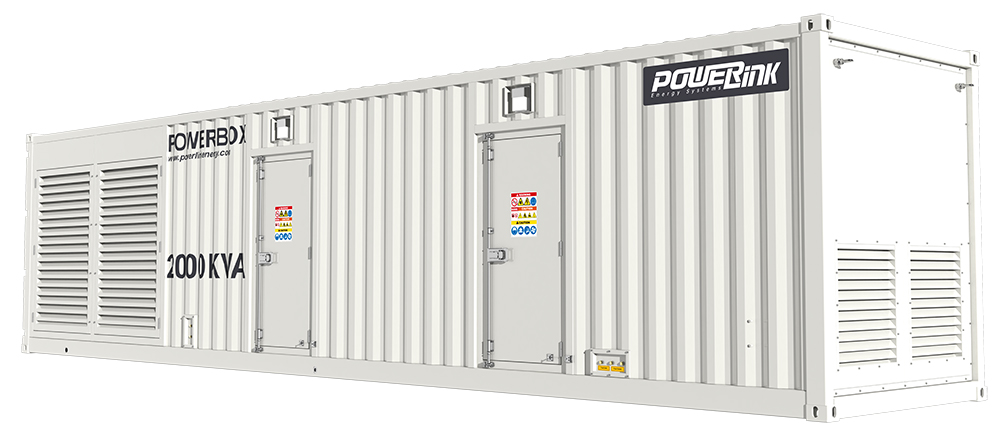
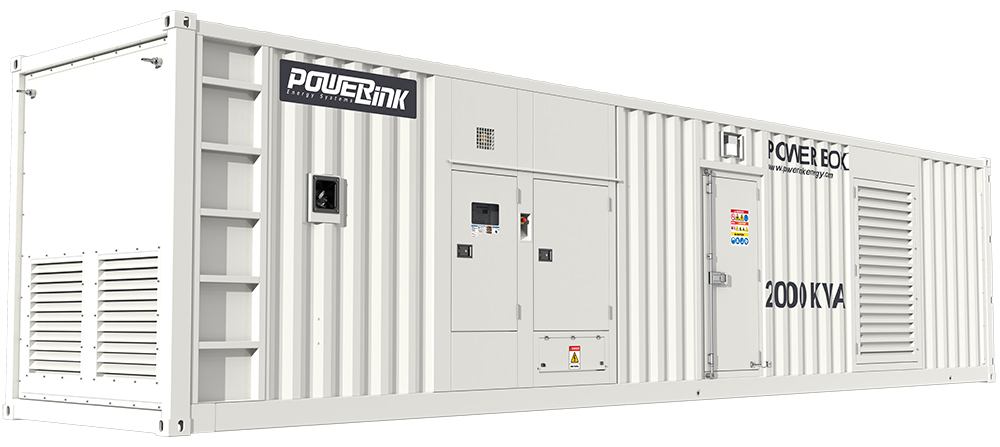
The engine block alone on a 500 kW unit weighs more than a full size pickup truck. At the upper end of the commercial range, 2,000 kW containerized units power entire offshore platforms and remote mine sites for twenty years with proper maintenance. These machines are infrastructure, not appliances.
How Diesel Generators Work
Engine and Alternator: The Mechanical Chain
A diesel engine burns fuel to spin a crankshaft. That crankshaft turns a rotor inside an alternator. The alternator converts mechanical rotation into alternating current through electromagnetic induction. The engine governor maintains a constant speed, typically 1,800 RPM for 60 Hz output in North America, regardless of load changes. Voltage regulation happens at the alternator side through an automatic voltage regulator that adjusts excitation current to the rotor windings.
The Automatic Transfer Switch Sequence
An automatic transfer switch, or ATS, constantly monitors utility voltage on the incoming line side. When voltage drops below a set threshold, typically 80 to 90 percent of nominal, the ATS sends a start signal to the generator controller. The engine cranks, fires, and reaches stable speed and voltage within ten to fifteen seconds.
The ATS then disconnects the building from utility power and connects it to the generator. When utility voltage returns and holds steady for a programmable delay, usually two to five minutes, the ATS transfers the building back and the generator runs a cool down cycle before shutting off. The entire sequence requires no human intervention. The generator sits in standby for 8,700 hours a year and needs to work perfectly for the 60 hours it actually runs.
Types of Commercial and Industrial Generators
Duty Ratings: Standby, Prime, and Continuous
Three duty ratings define how hard a generator can run and for how long. Standby rated units operate only during utility outages, typically fewer than 200 hours per year. EPA regulations cap non-emergency operation at 100 hours annually for most standby rated engines beyond routine maintenance and testing. Prime rated generators can serve as the main power source for unlimited hours with a variable load.
Continuous rated machines handle a constant load twenty four hours a day with no load variation permitted. The price difference between a 200 kW standby unit and a 200 kW prime unit exceeds 30 percent because the prime rated engine block, cooling system, and alternator are built to heavier specifications.
Physical Form Factors and Enclosures
Physical form factors matter as much as ratings. Open skid mounted units cost the least but offer zero weather protection and minimal noise abatement. Acoustic enclosures keep noise below 75 dBA at 23 feet, which makes the difference between a generator that neighbors tolerate and one that triggers noise complaints. Trailer mounted packages provide mobility for construction sites and rental fleets.
ISO containerized units ship to offshore rigs, remote mine sites, and disaster zones where the container itself becomes the generator housing. The right combination of rating and form depends on installation location, runtime expectations, and whether the generator backs up a functioning grid or replaces one.
Diesel vs Natural Gas: Choosing the Right Fuel Type
Energy Density and Footprint
Diesel stores energy more densely. A gallon of diesel contains roughly 137,000 BTU. A gallon equivalent of natural gas holds about 100,000 BTU. That 37 percent energy density gap means a 500 kW diesel generator occupies a smaller physical footprint than a 500 kW natural gas unit. Smaller footprint matters when the mechanical room has three feet of clearance on each side and the architect already signed off on the floor plan.
Fuel Storage and Supply Chain Risk
Diesel fuel stores indefinitely with proper treatment. Treated diesel in a bulk tank remains usable for over twelve months without degradation. Natural gas requires no storage. It arrives through a pipeline. That pipeline becomes the single point of failure during regional disasters. When a hurricane knocks out electrical infrastructure, gas pipeline pressure often drops at the same time. A facility running a natural gas generator may discover both its primary power source and its backup share the same vulnerability.
Emissions and Regulatory Considerations
Natural gas burns cleaner. Fewer particulates, no visible exhaust plume, lower nitrogen oxide output. For facilities in air quality non-attainment zones where diesel emissions trigger additional permitting, natural gas sidesteps that regulatory burden. It also eliminates fuel delivery logistics entirely. No tanker truck scheduling, no minimum order quantities, no spill containment compliance, no fuel polishing contracts.
For a hospital in a suburban office park with stable gas service and a generator that exercises weekly but rarely sees real outages, natural gas works. For a wastewater treatment plant in a flood zone where grid failure and gas disruption might arrive together, diesel is the safer call.
Key Features to Look for in a Commercial Generator
Remote Monitoring and Controls
Remote monitoring capability lets you check engine parameters, fuel level, and fault codes from a phone or building management system. Without it, the first sign of a problem is a generator that fails to start during an outage. Confirm the control panel supports Modbus RTU, Modbus TCP, or BACnet if the building management system needs to poll generator status. These protocols let the BMS read runtime hours, coolant temperature, oil pressure, and active alarms without a separate telemetry system.
Sound Attenuation and Enclosures
Sound attenuated enclosures keep noise under control. A generator running at 75 dBA at 23 feet is roughly as loud as a vacuum cleaner from that distance. An unenclosed unit at 95 dBA will generate noise complaints from buildings hundreds of feet away. Integrated fuel tanks sized for 24 to 72 hours of runtime at full load eliminate the need for refueling during extended outages.
Voltage Regulation and Power Quality
Voltage regulation within one percent, typically plus or minus 0.5 percent, protects sensitive electronics and variable frequency drives downstream. Poor regulation causes VFDs to trip on under-voltage or over-voltage faults, which defeats the purpose of having backup power. Confirm the alternator insulation class. Class H insulation rated for 125 degrees Celsius rise handles sustained full load in high ambient temperatures without degrading winding life.
Why Proper Generator Sizing Matters
The Cost of Undersizing
A generator sized too small trips its main breaker the moment a large motor starts. Repeated overloads score cylinder walls, glaze bores, and shorten engine life from twenty years to five. The overload may not trip the breaker every time, but the thermal stress accumulates. Cylinder liners develop hot spots. Piston rings lose tension. Oil consumption rises. Within two years, a generator that should have lasted two decades burns a quart of oil every eight hours.
Wet Stacking: The Hidden Cost of Oversizing
An oversized generator runs chronically underloaded, often at 20 to 30 percent of rated capacity. This produces wet stacking. Unburned fuel collects in the exhaust manifold, forms hard carbon deposits around valve seats and turbocharger vanes, and gradually chokes the engine down to a fraction of its rated output.
The sizing error that causes wet stacking is harder to detect because the generator still starts and runs during weekly exercise cycles. The degradation shows up as declining load acceptance, rising exhaust gas temperature, and increasing smoke over two or three years. By the time the symptoms are obvious, the carbon buildup is advanced enough to require disassembly rather than chemical cleaning.
How to Calculate Your Generator Size Step by Step
Building Your Equipment Inventory
Start with a complete equipment inventory. Every motor, every lighting circuit, every HVAC compressor, every server rack, every pump. Do not use square footage rules of thumb. Walk the facility with panel schedules and nameplate data. Label each load with two numbers: running watts and starting watts.
Accounting for Motor Starting Surge
Motors draw three to seven times their running current at startup. A 50 HP pump motor that draws 37 kW while running may pull 110 kVA during the first two seconds of spin up. HVAC compressors with across-the-line starters pull locked rotor current that can exceed six times running load. Variable frequency drives reduce but do not eliminate starting surge. Soft starters drop the surge factor to roughly two to three times running load.
Final Calculation and Safety Margins
Add all running loads first. Then identify the single largest motor that will start while the generator is already carrying the base load. Add that motor’s starting surge on top of the running total. Apply a 20 percent margin for unlisted loads, measurement error, and future equipment additions.
Convert the final kW figure to kVA by dividing by the power factor, typically 0.8 for commercial loads with a mix of resistive and inductive equipment. The resulting kVA number is the minimum alternator rating your generator needs. Round up to the nearest standard frame size. Rounding down creates a machine that works on paper and stalls on transfer.
Prime Power vs Standby Power: Selecting the Right Rating
Standby Rated Generators
Standby generators are designed for occasional use during utility outages. The engine, cooling system, and alternator are spec’d for intermittent duty with an average load factor of 60 to 70 percent over a 24 hour outage. EPA regulations limit non-emergency operation to 100 hours per year for most standby rated engines. Exceed that and the facility is out of compliance unless the engine meets stationary emergency or non-emergency certification requirements.
Prime Power Generators
Prime power generators are designed for unlimited hours with a variable load. The cooling package is larger. The alternator carries a higher temperature rise rating. The engine is configured for continuous duty cycle. The fuel consumption curve stays nearer its best efficiency point across a wider load range. A 200 kW prime rated unit costs 30 to 40 percent more than a 200 kW standby rated unit because the components are heavier throughout the entire power train.
Continuous Rated Generators
Continuous rated generators sit at the top of the duty cycle hierarchy. They handle a fixed, unchanging load 24 hours a day, 365 days a year, with no derating and no variation. These units power remote mining operations, off grid telecom towers, and island microgrids where the generator never shuts down except for scheduled maintenance. Buy standby if you have reliable grid power and need outage protection. Buy prime if the generator is your grid power. Buy continuous if your generator is your grid power and it runs around the clock.
Commercial Generator Sizing by Industry
Healthcare Facilities
Healthcare facilities follow NEC 517, which divides the electrical system into three branches: life safety, critical, and equipment. Life safety loads include egress lighting, fire alarm systems, and elevator power. Critical loads include surgical lighting, patient monitoring, and imaging equipment that cannot tolerate interruption. The generator must start and accept full load within ten seconds of utility failure. Joint Commission surveys check generator test logs and load bank results. A failed test during survey season can mean conditional accreditation.
Data Centers
Data centers design for redundancy beyond minimum code. A typical Tier III data center runs N+1 generator configuration: one more generator than the calculated IT load requires. If the facility needs 1,200 kW of backup power and the generator fleet uses 400 kW units, four generators run with a fifth as standby. Any single unit can fail during an outage without dropping the rack. The generator sizing accounts for UPS recharge current on top of the running IT load, which adds 15 to 25 percent to the nameplate requirement.
Construction Sites
Construction sites demand portability and the ability to handle wildly varying loads. A tower crane draws near zero most of the shift and then pulls locked rotor current when lifting a concrete bucket. Welders cycle on and off in unpredictable patterns. The generator must ride through voltage dips without dropping offline while also being light enough to tow between job sites. Enclosed trailer mounted diesel units in the 25 to 150 kW range dominate this segment.
Manufacturing Plants
Manufacturing plants with large induction motors present the hardest sizing challenge. A 200 HP extruder motor that draws 150 kW running may demand 450 kVA during across-the-line starting. If three of these motors start sequentially rather than simultaneously, the generator only needs to accommodate the largest single starting event plus the running load of the other two. If all three could start together after a momentary voltage sag, the generator must be sized for that worst case scenario.
Common Generator Sizing Mistakes to Avoid
Ignoring Motor Starting Current
Ignoring motor starting current is the most expensive sizing mistake and the most common. A facilities team looks at a 40 kW chiller nameplate and adds 40 kW to the load list. The chiller draws 40 kW running and 140 kVA during locked rotor starting. The generator sized for 40 kW stalls the moment the chiller tries to start during a real outage.
Overcompensating with Arbitrary Safety Factors
Adding an arbitrary safety factor that doubles the calculated load causes the opposite problem. A generator sized for 200 percent of actual load runs at 30 to 35 percent capacity during weekly exercise cycles. Carbon builds. Wet stacking begins. The engine degrades while showing no fault codes. Choosing by purchase price instead of by load calculation guarantees either the wrong size or the wrong duty rating.
Commercial Generator Buying Checklist
Verify Factory Test Data and Service Network
Request a factory load test report showing voltage regulation under steady state load, frequency stability, and step load response before signing a purchase order. Any manufacturer that cannot provide this data for the specific unit they are shipping you should not get your business. Verify the dealer or distributor has a factory trained service team within 100 miles of your site. The warranty is only as good as the technician who shows up at 3:00 AM when the generator fails to start.
Confirm Fuel Logistics and Site Access
Confirm fuel delivery logistics before the generator arrives. Can a tanker truck physically access the generator pad location? What is the minimum delivery quantity from the nearest diesel supplier? Some suppliers will not dispatch a tanker for less than 150 gallons. If your bulk tank holds 200 gallons and the generator burns 25 gallons per hour at full load, you have eight hours of runtime before needing a refuel. Extend that with a larger tank or accept that extended outages require logistics planning.
Check Noise Ordinances and Air Permits
Check local noise ordinances during the site evaluation phase, not during commissioning. Municipalities in residential adjacent zones often cap generator noise at 60 to 65 dBA at the property line. An open skid diesel generator produces 95 to 105 dBA at three feet. Meeting a 65 dBA limit at 150 feet requires a hospital grade acoustic enclosure, a sound wall, or both. The cost of noise mitigation can equal the cost of the generator itself if discovered late. Verify air permit requirements. Facilities in EPA non-attainment zones for ozone or particulates may face additional permitting restrictions that take 60 to 90 days to process.
Diesel Generator Maintenance Schedule
Weekly and Monthly Tasks
Weekly inspections cover visual checks for fluid leaks, coolant level, oil level on the dipstick, and battery charger voltage. Confirm the charger is in float mode at the correct voltage for the battery type. A charger stuck in equalize mode boils electrolyte and kills batteries within weeks. Open the control panel and check for active or logged fault codes. Fifteen minutes of weekly attention catches the slow failures that cause failure-to-start events.
Monthly service adds air filter inspection and fuel water separator draining. Drain the separator into a clear container. Water collects at the bottom, diesel floats on top. If a tablespoon of water comes out in June and three tablespoons come out in August, the bulk tank has a condensation problem or a leak that needs attention before water reaches the injectors. Water in diesel supports microbial growth that produces acidic byproducts. Those byproducts corrode injector tips and fuel pump internals.
Biannual and Annual Service
Biannual service replaces fuel filters and tests coolant chemistry with a refractometer or test strip. Coolant that tests acidic, with a pH below 8.0, will eat head gaskets and cylinder liner O-rings over time. The fix is a coolant drain and flush that costs a few hundred dollars. The alternative is pulling cylinder heads for gasket replacement that costs $8,000 to $15,000.
Annual service is the full stop. Oil drain and fill with laboratory sample analysis. Replace all filters: oil, fuel, air. Replace belts and inspect hoses for cracking or soft spots. Run a loaded test at 80 percent of rated output or higher for a minimum of two hours.
Load Bank Testing
Load bank testing at least once per year forces the generator to operate at rated capacity and burns off light carbon deposits that wet stacking leaves behind. A resistive load bank connects to the generator output and draws a controlled current, typically stepping from 25 to 50 to 75 to 100 percent of rated load over a two to four hour test. Skip the load bank test for two years and you may discover the cooling system radiator is partially plugged only when a real outage demands full load for six hours.
How to Build a Long Term Maintenance Program
Document Everything in a CMMS
A maintenance program that lives in a single technician’s notebook is not a program. It is a single point of failure. The technician leaves and the next person inherits a generator they have never touched with zero documentation.
Put every inspection result, every filter replacement date, every fluid sample analysis, and every load test outcome into a computerized maintenance management system. When an oil analysis returns with elevated iron at 15 parts per million, you need to see the trend line across three years of samples. Iron rising from 8 to 12 to 15 across three consecutive six month intervals indicates a cylinder liner wearing at a measurable rate. A single reading of 15 ppm could be a contaminated sample or a sampling error. Without the trend, you cannot tell the difference and you cannot plan the rebuild budget.
Assign Ownership and Stock Consumables
Assign ownership to a person, not a department. Departments do not remember to order fuel filters. People do. Keep a shelf stock of consumables on site. Two sets of fuel filters, a case of oil filters, spare belts in the correct sizes, a replacement battery charger module, and five gallons of the correct oil grade. The $400 in spare parts sitting on the shelf in a labeled bin prevents a $4,000 emergency service call on a Saturday night when the generator fails its weekly exercise and the nearest open parts counter is 300 miles away.
Set Escalation Logic for Missed Tasks
Set automatic reminders in the CMMS with escalation logic built in. When the monthly fuel separator drain task fires and the technician marks it complete, the system logs compliance. When the task fires and nobody responds, the system escalates to the facility manager after 48 hours. When it still sits open after seven days, it escalates to the director. The generator will sit quietly for 8,700 hours a year and start every week for its exercise cycle. The first time it truly matters, during a real outage, it has to work. A maintenance program without escalation and accountability works right up until the moment it does not.
Your Power Generation Solutions
If you are looking for a trusted supplier, PowerLink offers a comprehensive range of diesel gensets designed to meet diverse power demands, from small standby units to large-scale industrial solutions. With advanced engineering, strict quality control, and global service support, PowerLink ensures reliable performance in even the most demanding conditions. Explore more about their diesel gensets solutions at https://powerlinkenergy.us/diesel-gensets/ and find the right power solution tailored to your project needs.
--- END ---