POWERLINK

Blog

How Air Compressors Work? A Comprehensive Guide

Apr 17,2024

Air compressors are an essential tool in many industries, from manufacturing to construction, providing the power needed for a variety of applications. Understanding how an air compressor works is crucial to maximizing efficiency and productivity.

This comprehensive guide will take an in-depth look at the inner workings of air compressors, covering different types, key components, and practical applications.

Eagle-Type

Air Compressor Basics

At its core, an air compressor converts mechanical energy from a power source into potential energy stored in compressed air. The air compression process typically involves four key stages:

1. Drawing in Ambient Air

The compressor pulls in air from the surrounding environment through an intake valve. An air filter is usually installed to remove dust, dirt, and other contaminants, ensuring clean air enters the system.

2. Compressing the Air

Once inside the compression chamber, the air is compressed by a piston, rotary screw, or other compression mechanism. As the air volume decreases, its pressure increases, creating a supply of high-pressure air.

3. Storing Compressed Air

The compressed air is then stored in an air receiver tank for later use. This storage tank helps maintain a steady supply of pressurized air and improves system efficiency.

4. Releasing Air for Applications

When needed, the compressed air is released through the discharge system and delivered to various applications, such as pneumatic tools, spray guns, nail guns, manufacturing equipment, and other industrial machinery.

Components of an Air Compressor System

Prior to delving into the functionalities of air compressors, it is crucial to acquire a comprehensive understanding of its various components. This foundational knowledge will not only facilitate proper operation but also enable effective troubleshooting during usage.

Key elements of an air compressor encompass:

Tank: The compressed air is stored here and subsequently discharged through the outlet valve.

Pump: The pump functions to compress air and subsequently fills the tank.

Pressure switch: Regulates the internal air pressure of the tank by automatically activating or deactivating the motor as required.

Motor: The motor drives the pump which compresses air into the tank, and also operates additional components of the air compressor, including the fan and gauge.

Pressure Gauges: They display the pressure levels within the tank and at the outlet, enabling precise monitoring and adjustment.

Types of Air Compressors

Air compressors are typically grouped into two main categories: positive displacement compressors and dynamic compressors. Understanding the differences between these compressor types can help you choose the right solution for your application, whether it’s construction, mining, manufacturing, or industrial production.

Positive Displacement Compressors

Positive displacement compressors work by trapping a specific volume of air and mechanically reducing its volume, which increases air pressure. This category includes reciprocating and rotary screw compressors.

Reciprocating (Piston) Compressors

Reciprocating compressors use a piston driven by a crankshaft to compress air inside a cylinder. As the piston moves, the air is compressed into a smaller space, creating higher pressure.

These compressors are commonly used in automotive repair shops, small manufacturing facilities, and applications that require intermittent compressed air at relatively high pressures.

Benefits of Reciprocating Compressors:

  • Capable of producing high pressure
  • Well-suited for intermittent use
  • Simple design with relatively low upfront cost
  • Rotary Screw Compressors

Rotary screw compressors use two precision-machined rotors that mesh together to continuously compress air. As air moves through the compression chamber, the space between the rotors decreases, raising the air pressure before it exits the compressor.

Because they provide a continuous supply of compressed air, rotary screw compressors are the preferred choice for demanding industrial applications that operate throughout the day.

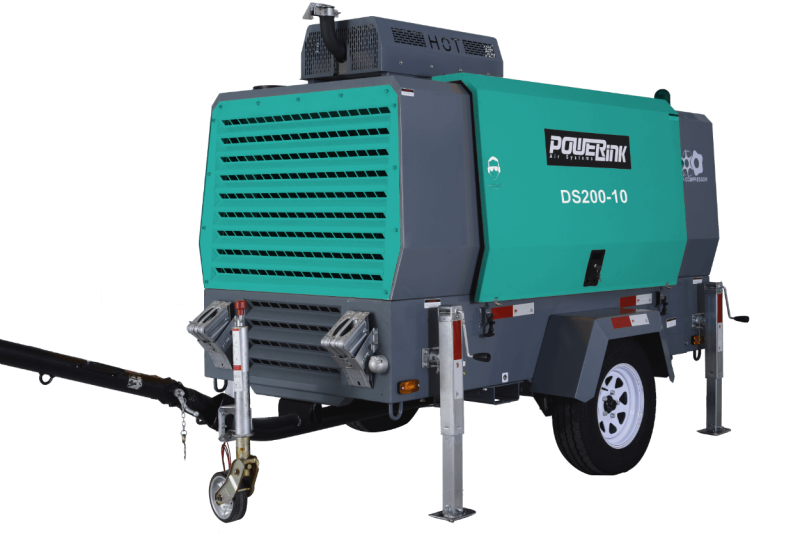
PowerLink air compressors utilize advanced rotary screw technology to deliver dependable performance in construction, mining, drilling, oil and gas, and other heavy-duty environments.

Key Features of PowerLink Rotary Screw Air Compressors:

  • Airflow capacities up to 1,400 CFM
  • Working pressures up to 24 bar
  • Continuous-duty operation for demanding job sites
  • High-efficiency screw air ends for reliable performance
  • User-friendly intelligent control systems
  • Low-noise enclosure designs
  • Available in both portable diesel-powered and stationary configurations

These features make rotary screw compressors an excellent choice for projects that require consistent airflow, fuel efficiency, and long-term reliability.

Dynamic Compressors

Unlike positive displacement compressors, dynamic compressors increase air pressure by accelerating airflow and converting velocity into pressure energy.

Centrifugal Compressors

Among dynamic compressors, centrifugal compressors are the most widely used. Instead of trapping and compressing a fixed volume of air, they increase air pressure by accelerating airflow and converting velocity into pressure energy.

A centrifugal compressor uses a high-speed rotating impeller to draw air into the center of the machine and force it outward. As the air passes through a diffuser, its velocity is converted into pressure, producing a continuous flow of compressed air.

Because of their ability to handle large volumes of air efficiently, centrifugal compressors are commonly used in large industrial facilities where high airflow is more important than extremely high pressure.

Common applications include:

  • Power generation facilities
  • Petrochemical plants
  • Steel manufacturing
  • Large industrial processing facilities

Benefits of Centrifugal Compressors:

  • High airflow capacity
  • Continuous, vibration-free operation
  • Excellent efficiency in large-scale applications
  • Lower maintenance requirements for high-volume air systems

How Does an Air Compressor Work?

An air compressor works by converting power from an electric motor, diesel engine, or gas engine into potential energy stored in compressed air. An air compressor sucks in atmospheric air, compresses it to a higher pressure, and stores it in a tank for later use.

Here’s how an air compressor works:

  1. An electric motor or engine powers a pump, which draws air from the atmosphere through an intake valve.
  2. A pump compresses the air and forces it into a storage tank where it is pressurized.
  3. When the pressure inside the tank reaches a certain level, the pressure switch automatically turns off the compressor to prevent overpressure.
  4. The compressed air in the tank can be used to power tools and equipment, inflate tires, or perform a variety of other tasks.
  5. When the air in the tank runs out, the compressor will restart to replenish more compressed air into the tank.
main-featurers

Mechanical Principles of Air Compressor

An air compressor functions by drawing air into a chamber and subsequently compressing it. This pressurized air is then channeled through an outlet in the tank, accumulating pressure. This mechanism can be likened to releasing air from an inflated balloon, the compressed air, upon release, is harnessed as energy.

They operate using engines that transform electrical energy into kinetic energy. This process is akin to that of an internal combustion engine, employing components such as a crankshaft, pistons, valves, cylinder heads, and connecting rods to facilitate this conversion.

Compressed air serves as a versatile resource, capable of powering an array of tools. Among the popular choices are nail guns, impact wrenches, sanders, and paint sprayers.

How Does An Air Compressor Regulator Work?

The regulator is affixed to the outlet of the compressor reservoir and is equipped with an adjustable knob and a pressure gauge.

Rotating the knob counterclockwise exerts pressure against the spring that constrains the valve, subsequently decreasing airflow to the regulator and lowering pressure.

Conversely, turning the knob clockwise relaxes both the spring and valve, facilitating an increased flow of high-pressure air through the output.

When the pressure needed to operate a tool is below the level present in the air tank, the regulator automatically modifies this pressure.

Although a regulator is unable to increase the pressure beyond what is contained within the tank, it does guarantee that your tools receive steady airflow at the proper pressure.

The regulator is designed to cease the operation of the pump when it detects that a predetermined pressure threshold has been met. This action may halt the piston’s movement mid-stroke, resulting in the accumulation of compressed air within the chamber.

The presence of this compressed air can exert excessive strain on the starting circuit, necessitating increased power for motor initiation.

To mitigate this issue, a safety valve can be installed as an auxiliary component. This valve functions to release any trapped air, thereby preserving the integrity and efficiency of the starting mechanism.

How Air Compressor Lubrication Works?

Air compressor lubrication is achieved through the application of oil to the compressor’s crankcase, effectively minimizing friction and the resultant heat during its operation.

This oil facilitates the seamless functioning of moving components within the compressor, including pistons and bearings.

The lubrication process employs oils or synthetic lubricants specifically engineered to endure the elevated temperatures and pressures encountered during compressor operations.

The lubricant is typically housed in a reservoir within the compressor and is circulated throughout the system either by a pump or via the natural flow of compressed air.

As it travels through the compressor, the lubricant envelops the moving components, effectively reducing friction, heat generation, and wear.

Spirit-Type

Common Applications of Air Compressors

Industrial Applications

Air compressors are commonly used in industries for various applications such as powering pneumatic tools, operating machinery, and controlling processes like spray painting and sandblasting.

Construction

Air compressors are essential in the construction industry for powering tools like jackhammers, nail guns, and paint sprayers. They are also used for handling materials like concrete and sand.

Automotive

Air compressors are used in automotive applications for inflating tires, operating pneumatic tools, and powering air suspension systems. They are also used in car wash facilities for cleaning and drying vehicles.

HVAC Systems

Air compressors are used in heating, ventilation, and air conditioning (HVAC) systems for providing compressed air to equipment like pneumatic controls and valves.

Refrigeration

Air compressors play a crucial role in refrigeration systems by compressing refrigerant gases to create the cooling effect needed for appliances like refrigerators and air conditioners.

Aerospace

Air compressors are used in the aerospace industry for various applications like powering hydraulic systems, operating aircraft landing gears, and pressurizing cabin air.

Medical

Air compressors are used in medical applications for powering respiratory equipment, operating dental tools, and providing compressed air for medical instruments.

Food and Beverage Industry

Air compressors are used in the food and beverage industry for applications like packaging, bottling, and conveying materials. They are also used for operating pneumatic machinery and equipment.

Cleaning

Air compressors are used for cleaning applications in various settings such as industrial facilities, automotive shops, and commercial buildings. They are used for powering air tools like blowguns and pressure washers.

Air Compressor Maintenance Tips

Routine maintenance is one of the most important factors in maximizing air compressor performance, improving energy efficiency, and extending equipment life. A well-maintained compressor operates more reliably, experiences fewer unexpected breakdowns, and delivers lower overall operating costs.

1. Perform Regular Inspections

Routine inspections help identify minor issues before they turn into costly repairs. Operators should regularly check air filters, oil levels, hoses, fittings, belts, and cooling systems to ensure everything is functioning properly.

Monitoring operating pressure, temperature, and airflow can also help detect performance issues early and prevent unnecessary energy consumption.

2. Use Genuine Replacement Parts

When replacement parts are needed, always use genuine OEM components recommended by the manufacturer.

Original parts are designed to meet the compressor’s exact specifications and performance standards. Using aftermarket or non-genuine components may reduce efficiency, increase wear, and potentially compromise system reliability and safety.

3. Follow the Recommended Service Schedule

Every air compressor should be serviced according to the manufacturer’s maintenance guidelines. Scheduled maintenance helps keep critical components in peak operating condition while reducing the risk of unplanned downtime.

Routine service performed by qualified technicians can identify developing issues before they affect production, helping maintain consistent performance and extend equipment life.

How Long Does an Air Compressor Last?

The service life of an air compressor depends largely on operating conditions and maintenance practices. With proper care, many industrial air compressors can provide reliable service for 10 to 15 years or longer.

The first several years of operation are especially important. Consistent preventive maintenance, timely filter and lubricant changes, and regular system inspections can significantly extend equipment lifespan and help maintain peak efficiency throughout the life of the compressor.

The Value of Preventive Maintenance

A proactive maintenance program helps reduce operating costs, improve energy efficiency, and maximize equipment availability. Preventive maintenance can also minimize unexpected failures, improve productivity, and protect your investment over the long term.

Whether operating a portable rotary screw compressor on a construction site or a stationary compressed air system in a manufacturing facility, a structured maintenance plan is essential for achieving maximum reliability and performance.

By staying ahead of maintenance requirements, businesses can reduce downtime, lower lifecycle costs, and ensure their compressed air systems continue to operate at peak efficiency year after year.

Conclusion

A diverse array of pneumatic tools and machinery, including air drills, braking systems, and HVAC units, play a crucial role in enhancing safety, efficiency, and comfort in daily life.

Globally, compressed air is instrumental in workshops for tasks such as applying paint and eliminating dust and debris. A thorough comprehension of the mechanics behind air compressors is pivotal for optimizing their performance and efficiency.

Powerlink Compressors offers a wide range of high-quality air compressors. For more information about our products, please feel free to contact us.

FAQs

1. How Does an Air Compressor Work?

An air compressor draws in air, compresses it to increase pressure, and delivers or stores it for use in pneumatic tools, machinery, and industrial equipment.

2. What Are the Main Types of Air Compressors?

The most common types are reciprocating (piston), rotary screw, and centrifugal compressors. Each is designed for different airflow and pressure requirements.

3. What Is the Difference Between a Rotary Screw and a Piston Compressor?

Rotary screw compressors provide continuous airflow for industrial use, while piston compressors are better suited for intermittent operation and smaller applications.

4. Why Is Oil-Free Compressed Air Important?

Oil-free air helps prevent contamination and is commonly required in food processing, pharmaceuticals, electronics, and healthcare industries.

5. How Do I Choose the Right Air Compressor?

Consider your required airflow (CFM), operating pressure (PSI/bar), application, and duty cycle to select the right compressor.

6. What Size Air Compressor Do I Need?

Choose a compressor based on the total CFM demand of your tools and equipment, with additional capacity for future needs.

7. How Often Should an Air Compressor Be Serviced?

Regular maintenance, including filter changes, inspections, and oil service, helps ensure reliable performance and longer equipment life.

8. How Long Does an Air Compressor Last?

With proper maintenance, most industrial air compressors can provide reliable service for 10–15 years or more.

9. What Industries Use Air Compressors?

Air compressors are widely used in construction, mining, manufacturing, oil & gas, automotive, agriculture, and power generation.

10. What Are the Benefits of Rotary Screw Air Compressors?

Rotary screw compressors offer continuous operation, high efficiency, low noise levels, and dependable performance for demanding applications.

--- END ---