
Maximizing Efficiency with GXC Series Gas Generator Sets
Dec 12,2025
In today’s world, where energy efficiency, sustainability, and cost-effectiveness are more critical than ever, combined heat and power (CHP) offers an attractive solution for industrial facilities, commercial buildings, and distributed energy systems.
PowerLink’s GXC Series CHP units are designed to meet these needs, providing reliable electricity and useful heat from a single fuel source. Whether using natural gas or biogas, GXC units provide power and heat to facilities in a flexible, efficient, and economical manner, maximizing fuel utilisation and minimising waste.
This article will explore how the GXC Series works, why it stands out among numerous CHP solutions, and the factors potential users should consider when selecting and deploying GXC units.
What Is Cogeneration?
Combined heat and power (CHP) refers to a system that simultaneously generates electricity and usable heat using the same fuel source and combustion process. Unlike traditional pure electricity generation methods, CHP systems can capture and reuse the heat generated during power generation, thereby improving overall energy efficiency.
This dual-output configuration significantly improves overall efficiency, while traditional pure electricity generation methods lose most of the fuel’s energy as waste heat.
The GXC series embodies this concept. Designed as a “distributed energy” solution, the GXC series units can provide 50kW to 350kW of power generation while capturing waste heat for heating or other thermal energy applications.
With its compact design, modularity, and fuel flexibility, the GXC series units are suitable not only for large, high-energy-consuming power plants but also for medium-sized industrial facilities, farms, commercial buildings, wastewater treatment plants, and other distributed energy applications that require the simultaneous use of electricity and heat.

The Features of the GXC Series
GXC Power Range and Fuel Flexibility
The GXC series offers a wide power range to flexibly meet diverse energy needs. Core models range in power output from approximately 50kW to 350kW. In certain markets or configurations, power can reach 550kW.
Fuel flexibility is another significant advantage: GXC units can be configured to use natural gas or biogas.
This flexibility allows users to tailor the GXC series to different energy environments, from traditional natural gas infrastructure to renewable energy sources or waste-derived biogas, thus achieving low-carbon, sustainable energy solutions.
Configurations and Structural Options
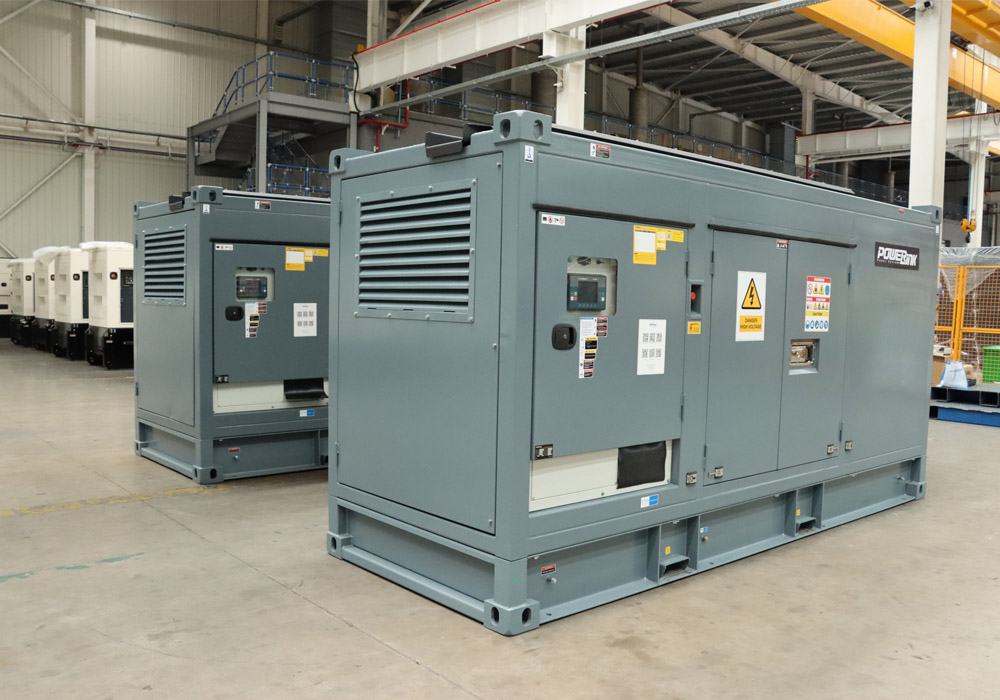
Considering the vastly different installation environments, from indoor server rooms to noisy outdoor locations, GXC units offer a variety of structural configurations: open frame, containerized, or soundproof/enclosed, depending on user needs.
Open frame units have a simple and compact structure, making them easier to integrate with external heat recovery or facility systems.
Containerized or soundproof units are suitable for locations with high requirements for noise reduction, weather protection, or environmental control.
These design options enable GXC units to be flexibly applied in a variety of scenarios, from industrial sites to commercial buildings or distributed energy systems.
Efficiency and Performance Metrics
The GXC series units excel in both electrical and thermal efficiency. Typical electrical efficiency is approximately 36%, and combined with efficient waste heat recovery, total energy efficiency can reach approximately 82%.
Some models employing advanced engine and generator designs can achieve even higher total efficiency after optimization for suitable fuel and load conditions.
In addition to high efficiency, GXC units prioritize reliability, durability, and long service life. Their modular structure allows for relatively quick installation and commissioning, enabling rapid deployment and potentially shortening the return on investment cycle for facility owners.
Core Components and Technical Design of GXC Units
Engine, Alternator, and Control System
The core components of each GXC unit are the engine and generator manufactured by PowerLink. These components are carefully selected to ensure durability, performance, and compatibility with gaseous fuels such as natural gas or biogas.
The control system manages the unit’s operation: it supports parallel connection, islanded operation, and comprehensive system monitoring. This includes monitoring gas system components (valves, regulators, filters), detecting gas leaks, and managing safety systems.
By combining intelligent control, robust engine design, and comprehensive safety mechanisms, the GXC cogeneration unit is designed to provide stable, safe, and long-term power generation.
Heat Recovery and Thermal Output
A major advantage of combined heat and power (CHP) lies in its utilization of thermal energy. GXC units, equipped with heat exchangers, circulating pumps, water jacket preheaters, and other components, can convert collected waste heat into usable thermal energy for space heating, process heating, hot water supply, and even, when connected to an absorption chiller, for use in a combined cooling and heating system.
This configuration transforms waste heat that would otherwise be wasted into a highly efficient energy flow, thereby improving overall fuel efficiency and reducing the environmental footprint.

The Application Scenarios
GXC’s versatility, efficiency, and compact design make it ideal for a variety of applications. Typical applications include:
Medium-sized industrial plants or factories requiring both electricity and process heat. In these settings, electricity and process heat demands often occur simultaneously, making combined heat and power (CHP) highly efficient.
Commercial buildings, hotels, or institutional facilities where both heating and electricity are critical, CHP can improve energy cost-effectiveness and reduce dependence on external supplies.
Farms, agricultural enterprises, and waste-to-energy projects utilizing biogas. When biogas is available, GXC units can convert it into valuable electricity and heat, improving sustainability and reducing energy costs.
Distributed energy or microgrid projects, especially in areas with weak or unstable grid connections. Because GXC supports both grid-connected and islanded operation modes, it can provide stable local electricity and heat, reducing transmission losses and increasing energy autonomy.
For projects requiring rapid deployment: Thanks to options such as modular structures and containerized units, GXC systems can be deployed relatively quickly compared to large centralized power plants, with minimal site preparation required.
Advantages of GXC Series Compared to Traditional Generation or Separate Systems
Compared to traditional stand-alone power and heating systems, GXC (Gas-to-Power) technology offers several significant advantages.
First, overall energy efficiency is significantly improved: by recovering waste heat, fuel utilization is higher, thereby reducing fuel consumption and lowering long-term operating costs.
Second, its modular design and fuel flexibility make it versatile: GXC units can use natural gas or biogas and can be configured according to different installation environments and scales. This flexibility allows for customized deployment, whether in urban commercial buildings or rural biogas power generation facilities.
Third, deployment is rapid with low upfront infrastructure investment. Especially compared to large centralized power plants, GXC is an ideal solution for distributed energy sources, retrofit projects, or facilities that require a reliable power supply but do not want to be entirely dependent on the grid.
Finally, GXC contributes to sustainable development and emissions reduction: by maximizing fuel efficiency and using cleaner fuels, GXC helps reduce carbon emissions compared to stand-alone fossil fuel power and heating systems.
Important Considerations When Selecting or Installing a GXC Unit
While GXC Series units offer many benefits, reliable and optimal operation requires careful planning and correct configuration. Factors to consider include:
Matching Power & Heat Demand to Unit Size
Choosing the right GXC model depends on both your electricity demand and your thermal (heat) requirements. Undersized units may not meet energy needs, oversized units may operate inefficiently if load is low or infrequent. It’s important to evaluate both current and future energy needs to select a model with appropriate capacity and flexibility.
Fuel Quality and Supply Stability
Since GXC units can use either natural gas or biogas, ensuring a stable fuel supply and qualified fuel quality is crucial. Especially for biogas applications, impurities, moisture, or inconsistent calorific value can affect performance or increase maintenance requirements.
Heat Recovery Integration and System Design
To fully utilize combined heat and power (CHP), the site must be equipped with facilities to utilize or store waste heat, whether for hot water supply, heating, industrial production, or absorption cooling. For optimal results, heat recovery piping, pumps, sensors, and any necessary heat storage or distribution systems must be carefully designed and installed.
Regulatory, Emission, and Safety Requirements
Because GXC units involve combustion of gas, exhaust management, and potentially emissions, all relevant local regulations or codes must be complied with. Proper ventilation, exhaust treatment, gas‑leak detection, and maintenance routines are essential to ensure safe and environmental‑compliant operation. The built-in monitoring and control system helps, but design and installation must meet standards.
Maintenance, Service Support, and Lifecycle Planning
Like any mechanical and combustion system, the GXC unit requires maintenance, especially during continuous or demanding operation. A regular maintenance schedule is recommended, along with ensuring adequate spare parts supply and periodic inspections of the engine/generator and heat recovery components. PowerLink provides global parts support and after-sales service, giving you peace of mind.

Why Choose PowerLink GXC?
The GXC series stands out among numerous cogeneration solutions for several reasons. First, its design philosophy: PowerLink integrates the engine, generator, control system, and heat recovery subsystem into a unified modular unit. This manufacturing integration ensures component compatibility, quality control, and simplified deployment.
Second, its flexibility: GXC offers a variety of fuel options, a wide range of power outputs, and structural configurations, allowing for customization to diverse projects, from remote biogas fuel farms to industrial plants on the urban fringe.
Third, its efficiency and environmental performance: By utilizing cogeneration and lean-burn technology, GXC improves fuel efficiency and reduces emissions compared to less efficient stand-alone power and heat systems.
Fourth, its ease and speed of deployment: The modular and compact design, coupled with the control system’s support for grid-connected/grid-connected operation or stand-alone island mode, means that GXC can be installed and commissioned relatively quickly, reducing upfront costs and shortening the payback period.
Finally, comprehensive after-sales support and global spare parts supply make long-term operation more controllable, giving customers who deploy these devices in remote or international environments peace of mind.
Conclusion
PowerLink’s GXC series of combined heat and power (CHP) units offers a robust, efficient, and flexible solution for distributed energy generation. It combines electricity production with heat output, thereby improving fuel efficiency and reducing emissions.
Its modular design, fuel flexibility, and adaptability to diverse installation environments make it suitable for a wide range of applications, from industrial and commercial facilities to farms and biogas projects, and even distributed energy systems. For organizations seeking efficient, sustainable, and economical energy infrastructure, the GXC offers a highly attractive development path.
--- END ---